
(Spoiler warning: I’m writing this post under the impression you’ve already read the book/watched the movie. Otherwise, why are you even here?)
I was thinking about the book Life Of Pi today.
I don’t know why. I listened to the audiobook a little over a year ago. It just randomly popped into my head today.
The book itself was a little hard for me to get through. Not because I didn’t like it, but it just seemed to drag on for a very long time (however, I think that might’ve kinda been the point.). I rated it three stars on Goodreads.
The story is very interesting to me, and it’s obviously very metaphorical. I’ve watched the movie several times (it’s very pretty), and I always seem to notice something new or make a new discovery or insight.
This isn’t a review, I just wanted to share my personal thoughts on the story. It’s one-hundred chapters long, so this isn’t not gonna be a complete analysis either. And forgive me if I misremember things about it.
First off, it talks a lot about religion. Several kinds in fact. And it discusses one’s ability to make a clear, concise decision one way or the other. It says that agnostics are basically people who can’t really make up their mind, as at least atheists are making a decision and sticking to it. And then Pi goes on to never really decide which religion he wants to follow, he just keeps stacking them one on top of the other.
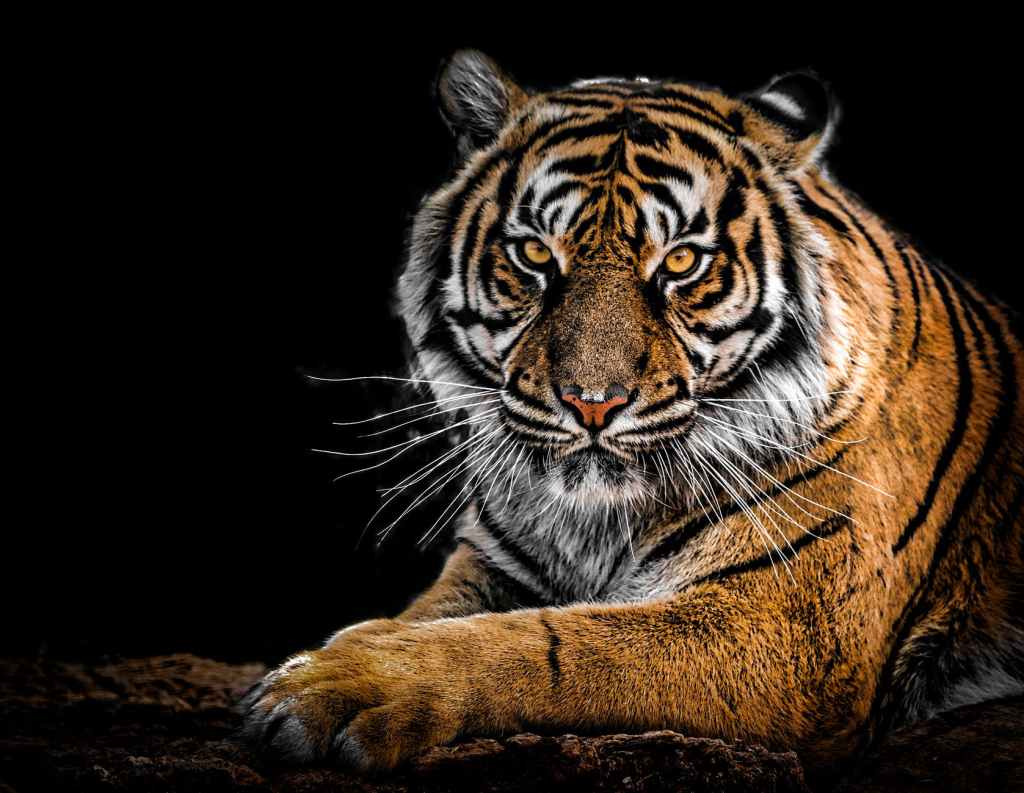
I feel like this mirrors later when you find out there’s actually two versions of what happened at sea. There’s the realistic version, and the tiger version. And he sticks to his guns that the tiger version is the real story, no matter how out-of-this-world it may be. He’s not pussy-footing back and forth, he picks one version and sticks with it, even if it’s unbelievable.
Personally, I think the true story of what happened was the one with the humans, not the animals (more on my reasoning later). I don’t know if Pi came up with the tiger story on his own, or if a child’s brain simply concocted this story to make it easier for him to accept. It’s very likely that if he had accepted the truth, he might have simply broken. He did what he had to do to survive, to make it out alive, whether that means he came up with the story himself, or he imagined it. I don’t find it unbelievable that he was driven slightly insane and his mind thought it up, though.
However, if my conclusion is true and the tiger story was false, if he were insane I don’t think he would have remembered the true story since his brain purposely tried to erase it and replace it with something better.
If the tiger story was the one that was true, then he just made up the human story, but boy did he manage to concoct a believable story to tell those Japanese men quickly, didn’t he? Otherwise, he had months in a boat to concoct the tiger story. I highly doubt that if the tiger story were true, that he’d anticipated beforehand the need to come up with a fake, more believable story for when he got rescued and spent months coming up with the awful human version. Why would he want to linger on something like that? Especially with everything else he was dealing with? So really, I’m not sure how quickly he actually could have translated what truly happened with the Richard Parker into a realistic story that fast.
But regardless of which one is true, Pi finally managed to make a definitive decision for once in his life and adamantly believes the tiger story.
One thing that struck me as odd was the way that one fish Pi killed changed colors. I assumed that was a metaphor or something, just like all the other weird stuff that happens. But I googled it, and apparently that’s a real thing that dorados do when they’re taken out of the water, they change colors. So I don’t think it had any deep, metaphorical meaning to it. But to see an animal in distress and flashing all these crazy colors, and then still kill it, shows how much he’s had to change to survive. He cried about killing a flying fish, but then he does this without much problem (if I remember correctly. I may be completely off base.) And its said that a person can get used to anything, even killing.
Another reason why I believe the human story to be the real one is because of the part where Pi goes blind, and then happens upon the blind frenchman who, like… floated up in another boat or something? I can’t really remember exactly. And I think at one point Pi thought it was Richard Parker talking? Anyway, after listening to this terrible jerk for a while, he starts to sound an awful lot like the hyena, and also the cook.
Nothing in the human story referred to anything in the animal story, but both the human and the animal story refer to this dude who killed people. That’s the main thing that makes me think it’s the one that really happened.
If I remember correctly, the movie didn’t really change a whole lot of the story, it just left stuff out (I hate that it left out the part where Pi kept asking the Japanese for food that he didn’t eat and just ended up hiding, and they were complaining about it, and then he offered them a cookie that was theirs to start out with. That part made me laugh.) So I can’t remember if this next topic is exactly how it went in the book, but I know it is in the movie.
After all this time at sea fighting to survive, Pi and Richard Parker both start to wear down. Pi finally admits that they’re gonna die, and says that he’s ready now. LITERALLY the very next scene, he wakes up on miracle island.
I am convinced that this island is not real. This island was a figment of his imagination, whether by choice or by insanity. He had finally admitted they were going to die, said that he was ready to die, and then ended up here.
I believe the island is a metaphor for hopelessness. And in the movie, when it shows a zoomed out glimpse of the island, it even literally looks like a (dead?) person lying on their back. I’m pretty sure that wasn’t by coincidence.
This island is a dream come true. It’s easy. So easy. He literally has yummy meerkats running up to him and watching as he picks them up and kills them. There’s fresh water right there. Why would he leave? Why would anyone leave? Why would he stay in that boat, fighting to survive, when he could just stay here? Even if that means never being rescued and living here forever, giving up on the rest of what life has to offer?
He could give up. It would be so easy. Just stop fighting. What does any of it matter anymore? He’s been fighting for so long, and he’s not anywhere closer to being rescued. Why keep at it? It’s freaking hard.
And he does give up, for a while. Or at least he flirts with the idea. He hangs out on the island.
This place is paradise. There’s nothing else to worry about here, every single need is taken care of.
But then he finds the tooth.
The island is carnivorous. He realizes that this place that seems perfect and easy is going to kill him if he stays here long enough. If he becomes complacent, it will swallow him up. Other people have fallen for the same trap, here’s proof of it. If he stays here, this is what will happen. For sure.
If he gives into hopelessness, he’s going to die. Without a doubt.
So now he has to decide whether he wants that or not. Is it worth the fight? Or should he just let it happen? It’d be easy, that’s for sure. Is that what he wants?
He decides it’s not. He doesn’t want to give up and go down without a fight. Get back to the real world, or die trying.
Metaphorically, the island has replenished his strength and given him food for the road. Literally, he has a renewed sense of vigor. He does want to live. He does want to survive. Even if it’s hard. Because even if he still dies out there, at least he will have tried rather than just stayed here and accepted his fate.
And then we come to Richard Parker, and how he just wandered away without a second glance.
The movie doesn’t go into the metaphor of Pi’s name, or the reason there’s one-hundred chapters even, but the book does.
One-hundred is a reasonable number. It’s concise. Pi (the math, not the person) is ridiculous and never-ending. It can’t make up it’s mind, as previously discussed. He wanted to be able to write a book in one-hundred chapters in order to have a sense of finality and closure, because he never got that with Richard Parker.
He never got to thank Richard Parker for helping him survive, and Richard Parker never looked back at him. He just wandered off, and for all we know, he’s still alive.
If the human version is true, then Richard Parker is actually Pi. Pi starts out as a vegan boy who can’t make up his mind on anything. Through the course of the story, he does some terrible things and has to break his own morals in order to survive. I believe that’s what Richard Parker is meant to symbolize, that survivor’s spirit. Pi had to become this tough person in order to survive, and once he was rescued and didn’t need to do that anymore, that part of him just… stopped. There wasn’t really a conclusion or anything, it just wasn’t necessary anymore. He did what he had to do, and it got him through it, and then he didn’t have to be that person anymore. He only killed animals (and people) because he had to. It was awful, but necessary if he didn’t want to die. It’s forgivable. He doesn’t have to keep on with it. His set his morals aside temporarily, but was able to pick them right back up when he got to safety.
But Richard Parker is still out there. There wasn’t a reconciliation, but he’s still alive.
That survivor spirit is still inside Pi. It didn’t die out. It’s still a part of him. If he ever were to need it again, it would come back out. Richard Parker will always be there for him, even if he can’t see him. There’s no reason for Richard Parker to stick around anymore, but he’s still out there in the shadows keeping an eye on things, and he’ll come back out if need be.
But for now, he can just nap in the shade.
And then, there’s the confusing quote: “And so it is with God.”
This stumped me at first, and apparently it has stumped a bunch of other people, too.
Here’s what I take it to mean:
Basically, the exact same thing happened in both versions. Nothing was changed, one is just more fantastical. But as far as the insurance claim is concerned, there’s not really a difference. The ship sank. Pi’s family died, the animals died, and he got stuck in a boat for months. Whether the story about Richard Parker is true, or the one with the cook, the same things happen.
If it makes no difference either way, if nothing fundamentally changes, which story do you believe? If the true story makes absolutely no difference on anything, why not believe the really cool one with the tiger? Even if it’s not true, it doesn’t hurt anything or anyone to believe it, and it makes it easier to accept the things that happened.
That’s why Pi says he has a story that’ll make you believe in God.
“And so it is with God.”
It’s the exact same thing.
If believing in God were to make absolutely no difference at the end of the day, if your life would turn out exactly the same either way, then what reason is there to not believe in Him? If it doesn’t change anything, then why not? At the end of the story, the Japanese people listened to the story about Richard Parker, then asked for the real story because they couldn’t give this crazy story back home. And then, after all that, they decided to go with the story about Richard Parker anyway. Because why not?
At the end of the day, Pi and the Japanese men all choose to believe the tiger story. It’s easier on the palate.
And also more fun.
 M. A. Whatley